Your Circadian Rhythm: The 24-Hour Master Clock
Think of your circadian rhythm as a master clock located in your brain—specifically, in a part of the hypothalamus called the suprachiasmatic nucleus (SCN). This clock coordinates all the 'smaller' clocks throughout your body, ensuring everything happens at the right time. It's the reason you naturally feel sleepy at night and more alert during the day.
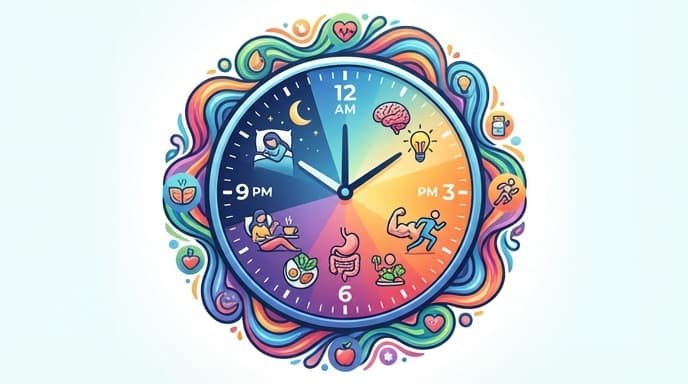
This internal 24-hour cycle is responsible for regulating key functions, including:
- The Sleep-Wake Cycle: It signals the release of melatonin, the sleep hormone, in the evening and cortisol, an alertness hormone, in the morning.
- Metabolism and Digestion: Your body is better prepared to digest food during the day than late at night.
- Body Temperature: Your core body temperature naturally drops slightly as you prepare for sleep and rises as you prepare to wake up.
- Hormone Production: It controls the release of various hormones related to stress, growth, and appetite.
How Light, Food, and Exercise Control Your Internal Clock
While your circadian rhythm is internal, it's calibrated by external cues from your environment. These cues, known as 'zeitgebers' (German for 'time givers'), keep your internal clock synchronized with the outside world.
- Light: This is the most powerful zeitgeber. Light exposure, especially sunlight, tells your brain it's daytime, which suppresses melatonin production and promotes wakefulness. Darkness signals that it's time to sleep.
- Meal Timing: When you eat can influence the clocks in your digestive system. Eating at consistent times each day can help reinforce a stable circadian rhythm.
- Physical Activity: Exercise can also act as a cue. A workout in the morning or afternoon can promote alertness, while strenuous exercise too close to bedtime can sometimes disrupt sleep.
Signs Your Circadian Rhythm is Out of Sync
When your lifestyle is at odds with your internal clock—due to things like shift work, jet lag, or staying up late looking at screens—it's called circadian misalignment. This can lead to a variety of issues:
- Difficulty falling asleep or waking up.
- Daytime sleepiness and low energy.
- Poor concentration and mood swings.
- Digestive problems.
- Long-term misalignment is associated with a higher risk for various health problems.
4 Simple Ways to Reset Your Body Clock for Better Energy and Sleep
The good news is that you can take active steps to support and reset a healthy circadian rhythm.
- Get Morning Sunlight: Aim for 10-15 minutes of direct sunlight exposure shortly after waking up. This is one of the most effective ways to anchor your internal clock for the day.
- Maintain a Consistent Sleep Schedule: Go to bed and wake up at roughly the same time every day, even on weekends. This is the cornerstone of good sleep hygiene.
- Avoid Bright Light at Night: Dim the lights in your home in the evening. Avoid using phones, tablets, and computers in the hour or two before bed, as the blue light they emit can suppress melatonin production.
- Time Your Meals: Try to eat your meals at consistent times each day and avoid large, heavy meals within 2-3 hours of your bedtime.
Frequently Asked Questions (FAQ)
Is everyone's circadian rhythm the same?
No. While most people follow a similar pattern, there are natural variations. 'Morning larks' have a rhythm that shifts earlier, making them feel energetic in the morning and sleepy early in the evening. 'Night owls' have a delayed rhythm, causing them to feel more alert later at night and struggle with early mornings.
What is chronobiology?
Chronobiology is the scientific study of circadian rhythms and other biological cycles. It explores how these internal clocks affect health, behavior, and medicine.
Can I 'catch up' on sleep on the weekends?
While sleeping in on the weekend can help reduce some sleep debt, it can also disrupt your circadian rhythm, leading to 'social jetlag' that makes it harder to wake up on Monday morning. Consistency is generally better than trying to catch up.
Summary: Key Takeaways
- Circadian rhythms are your body's internal 24-hour clocks that regulate sleep, metabolism, and hormones.
- Light exposure is the most powerful signal that keeps your internal clock synchronized with the environment.
- A misaligned circadian rhythm can lead to sleep problems, low energy, and other health issues.
- You can support your rhythm by getting morning sunlight, keeping a consistent sleep schedule, and avoiding bright light at night.
- Meal timing and exercise also play a role in regulating your body clock.