What Are Circadian Rhythms?
Think of circadian rhythms as the physical, mental, and behavioral changes that follow a 24-hour cycle. These natural processes respond primarily to light and darkness and affect most living things, including animals, plants, and microbes. In humans, nearly every tissue and organ has its own biological clock, but they are all synchronized by a 'master clock' in the brain located in the hypothalamus. This master clock, known as the suprachiasmatic nucleus (SCN), contains about 20,000 nerve cells and controls your body's overall rhythm.
The Main Conductor: Light
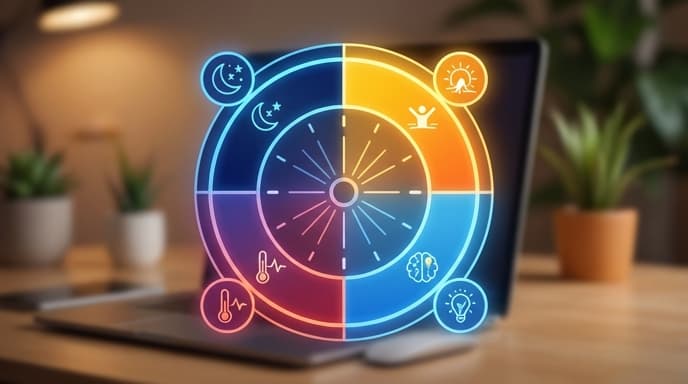
The most powerful external cue that influences your circadian rhythm is light. When light enters your eyes, special cells in your retinas send signals directly to the SCN. Here’s how it generally works:
- In the Morning: Exposure to sunlight tells the SCN that it's daytime. The SCN then sends signals to raise body temperature, increase the stress hormone cortisol (which promotes alertness), and suppress the sleep hormone melatonin. This is what helps you wake up and feel energetic.
- In the Evening: As darkness falls, the SCN signals the pineal gland to start producing melatonin. As melatonin levels rise, you begin to feel sleepy, preparing your body for rest.
This is why using bright screens from phones and laptops late at night can be so disruptive—the blue light tricks your brain into thinking it's still daytime, suppressing melatonin production and making it harder to fall asleep.
Signs Your Circadian Rhythm is Disrupted
In our modern 24/7 society, it's easy to throw your internal clock out of whack. Common causes include jet lag, shift work, and poor sleep habits. Signs of a disrupted circadian rhythm include:
- Difficulty falling asleep or staying asleep (insomnia).
- Waking up frequently during the night.
- Feeling groggy and tired during the day, even after a full night's sleep.
- Problems with concentration, memory, and mood.
- Changes in appetite and digestion.
How to Reset Your Internal Clock
The good news is that you can take practical steps to get your circadian rhythm back on track. Consistency is key.
- Get Morning Sunlight: Try to get at least 10-15 minutes of direct sunlight exposure within the first hour of waking. This is the most powerful signal you can send to your master clock to start the day.
- Stick to a Consistent Sleep Schedule: Go to bed and wake up around the same time every day, even on weekends. This reinforces your body's natural sleep-wake cycle.
- Control Your Light Exposure at Night: Dim the lights in your home in the evening. Avoid bright screens for at least an hour before bed. If you must use a device, use a blue light filter or night mode.
- Time Your Meals: Your digestive system also follows a clock. Try to eat your meals at consistent times each day and avoid large, heavy meals close to bedtime.
- Be Smart About Exercise: Regular physical activity can improve sleep quality and help regulate your rhythm. However, intense exercise too close to bedtime can be stimulating for some people, so it's often best to work out earlier in the day.
Disclaimer: This article is for informational purposes only and does not constitute medical advice. If you have a persistent sleep problem or suspect a sleep disorder, please consult a healthcare professional.
Frequently Asked Questions (FAQ)
Q: What is a chronotype?
A: A chronotype is your body's natural tendency to sleep at a certain time. You might be a 'morning lark' (early chronotype), a 'night owl' (late chronotype), or somewhere in between. While you can adjust your schedule, your chronotype is largely determined by genetics.
Q: Does caffeine affect circadian rhythm?
A: Yes. Caffeine blocks adenosine, a chemical that builds up during the day and promotes sleepiness. Consuming caffeine, especially in the afternoon or evening, can disrupt your ability to fall asleep at your natural bedtime.
Q: Can a short nap disrupt my rhythm?
A: Short naps of 20-30 minutes early in the afternoon are generally fine and can boost alertness. However, long or late-afternoon naps can interfere with your ability to fall asleep at night.
Key Takeaways
- Circadian rhythms are 24-hour internal clocks that regulate sleep, energy, and hormone release.
- They are primarily controlled by a 'master clock' in the brain that responds to light exposure.
- Morning sunlight helps wake you up by suppressing melatonin, while darkness at night promotes its release.
- You can reset a disrupted rhythm with consistent sleep schedules, smart light exposure, and regular meal times.
- Consistency, especially with your wake-up time, is the most important factor in maintaining a healthy circadian rhythm.