Is Your Home Wi-Fi Enough Protection?
Most people associate Virtual Private Networks (VPNs) with unsecured public Wi-Fi at airports, hotels, and cafes. And for good reason—those networks are prime targets for hackers. But once you're connected to your password-protected home Wi-Fi, it's easy to let your guard down. While your home network prevents neighbors from snooping on your traffic, it doesn't provide complete privacy. Your biggest vulnerability at home isn't a hacker next door; it's your Internet Service Provider (ISP).
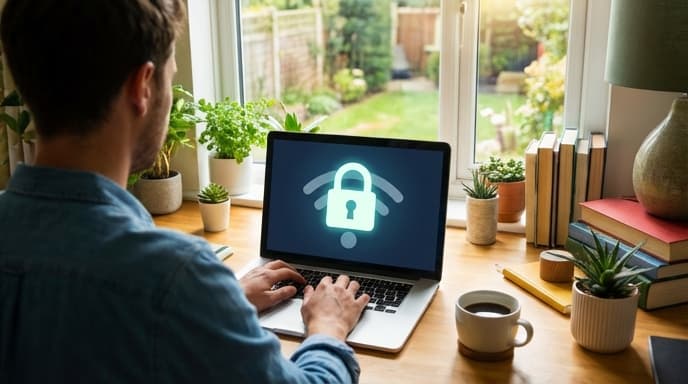
3 Reasons to Use a VPN at Home
Even on a secure network, a VPN adds critical layers of privacy and functionality. Here are the main reasons you should consider keeping your VPN on, even at home.
1. To Hide Your Activity from Your ISP
Your ISP can see every website you visit, how long you stay there, and the type of content you consume. In some countries, ISPs are legally allowed to collect and sell this anonymized browsing data to advertisers. A VPN encrypts your internet traffic, creating a private tunnel between your device and the VPN server. This means your ISP can see that you're connected to a VPN, but it can't see what you're doing online.
2. To Bypass Geo-Restrictions
Have you ever tried to watch a show on a streaming service, only to be met with a message that it's 'not available in your region'? This is called geo-blocking. A VPN allows you to connect to a server in another country, making it appear as if you are browsing from that location. This can unlock different libraries on streaming platforms or give you access to websites and services that are blocked in your country.
3. For an Extra Layer of Security
While your home router's firewall provides a good baseline of security, a VPN adds another powerful layer. It encrypts all of your data, protecting it from potential vulnerabilities in your home network setup. This is especially important if you handle sensitive information for work or manage personal finances online.
When Might You Not Need a VPN at Home?
A VPN can sometimes slow down your internet speed, as your data has to travel through an extra server. For activities like online gaming where every millisecond counts, you might choose to turn it off. Additionally, some websites or services, particularly banking apps, may block access from known VPN servers for security reasons.
Frequently Asked Questions (FAQ)
Will a VPN make me completely anonymous?
No. While a VPN significantly enhances your privacy by hiding your IP address and encrypting your traffic, it doesn't make you 100% anonymous. Websites can still use cookies, browser fingerprinting, and account logins to track you.
Is it legal to use a VPN?
In most countries, including the United States, Canada, and the UK, using a VPN is perfectly legal. However, any illegal activity conducted while using a VPN remains illegal.
Can I use one VPN for all my devices at home?
Yes. Most top VPN providers offer apps for various devices (computers, phones, tablets). Alternatively, you can install a VPN directly on your router, which will protect every device connected to your home Wi-Fi network.
Key Takeaways: Summary
- Your home Wi-Fi protects you from local snooping but not from your ISP.
- A VPN encrypts your traffic, preventing your ISP from monitoring your online activity.
- VPNs are useful for bypassing geo-restrictions on streaming services and websites.
- They add an extra layer of security for sensitive online tasks.
- You may not need a VPN for activities like online gaming where speed is critical.