What Your ISP Sees: A VPN Reality Check
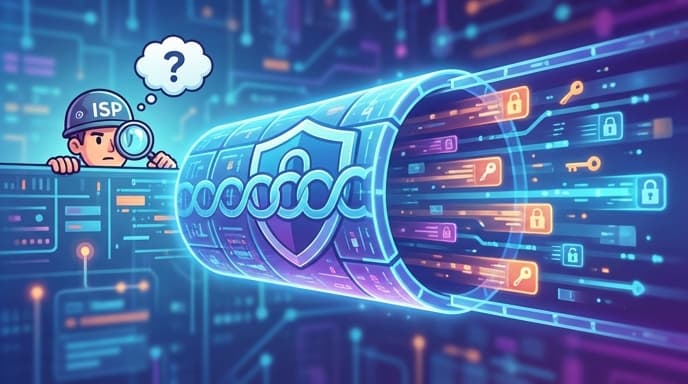
Using a Virtual Private Network (VPN) is one of the most effective ways to enhance your online privacy. It creates an encrypted 'tunnel' for your internet traffic, hiding your activity from prying eyes. But one of those sets of eyes belongs to your Internet Service Provider (ISP)—the company you pay for internet access. So, what exactly can they see when your VPN is active?
Life Without a VPN: An Open Book
Before we dive into the 'with VPN' scenario, let's understand what your ISP sees normally. Without a VPN, your ISP has a direct view of nearly everything you do online. This includes:
- Every website you visit: They know you went to `example.com`, how long you stayed, and every page you clicked on.
- Your search queries: While the search engine might encrypt the results, the ISP often knows what you're looking for.
- Videos you watch and files you download: They can see the source and type of data you are accessing.
- Your location: They know your physical location based on your connection.
In short, your browsing history is an open book to them, and they can use this data for marketing, throttling your connection, or complying with legal requests.
Life With a VPN: A Locked Diary
When you connect to a VPN, the picture changes dramatically. Your ISP can still see a few key things, but the important details are hidden.
What Your ISP CAN See:
- You are connected to a VPN: Your ISP can see that you've established a connection to an IP address that belongs to a VPN server. They can't see the VPN's final destination, just the first stop.
- The amount of data being transferred: They know how much data is moving through the connection, but not what that data contains. It's like seeing a sealed, armored truck on the highway—you know it's moving something, but you have no idea what's inside.
- The time and duration of your connection: They can log when you connect and disconnect from the VPN server.
What Your ISP CANNOT See:
- The specific websites you visit.
- Your search history.
- The content of your emails or messages.
- Any videos you stream or files you download.
The VPN's encryption scrambles all this data, making it unreadable to your ISP. They see the encrypted tunnel, but not the traffic flowing within it.
Frequently Asked Questions (FAQ)
Does a VPN make me 100% anonymous?
No. A VPN significantly enhances privacy but doesn't provide complete anonymity. Your VPN provider can still see your activity (which is why choosing a reputable 'no-logs' provider is crucial), and websites can still use cookies and browser fingerprinting to track you.
Can my ISP block my VPN?
In some cases, yes. Some ISPs or networks (like at a school or office) may block connections to known VPN server IP addresses. However, many premium VPNs have features to circumvent these blocks.
Is using a VPN legal?
In most countries, including the United States, Canada, and the UK, using a VPN is perfectly legal. However, any illegal activity performed while using a VPN is still illegal.
Key Takeaways
- Without a VPN, your ISP can see almost all of your online activity.
- With a VPN, your ISP can see that you're connected to a VPN and the volume of data, but not the content.
- A VPN effectively hides your browsing history, searches, and downloads from your ISP.
- Your privacy depends on choosing a trustworthy VPN provider with a strict no-logs policy.
- A VPN is a critical tool for privacy, but it's not a magic bullet for total anonymity.